
Nature and Healing in a Time of War
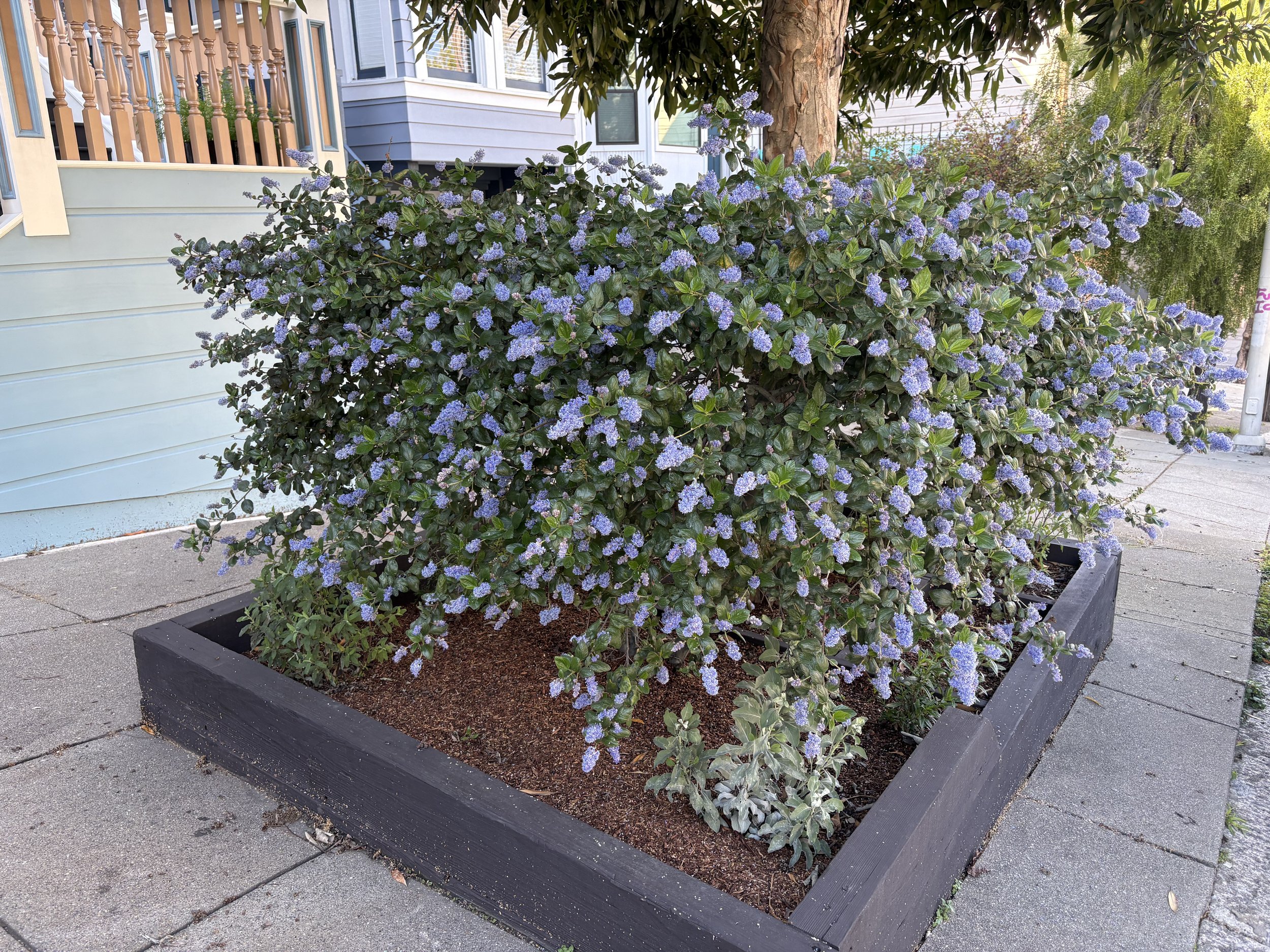
The early signs of Spring are here in San Francisco. With its hundreds of blooms, a ceanothus (California lilac) in front of our home is always the first to let us know that Spring is on its way. The plant is probably 50 times the size it was when we first planted it in a sidewalk garden we installed about ten years ago. It likes it here. The bees and birds like it too. We’ve taken out a good amount of cement in front of our home over the years and replaced it with native plants. Spring is a great time of year to enjoy the beauty of nature, and we’re fortunate to have so many blooms when we step out our front door.
This daily dose of peace I get from the ceanothus and the surrounding plants can come to a screeching halt when I see the latest headlines. These are distressing times with so many lives being lost and places being destroyed from rising military conflict.
One thing for us to reckon with is how much the extraction of nature lies at the heart of wars and global conflict, an extension of the broken relationship between our dominant economic system and nature. Current aggression from the US and Russia reflects this dynamic.
Iran has the world’s fourth-largest oil reserves and the second-largest natural gas reserves. Venezuela has the world’s largest oil reserves and the seventh largest natural gas reserves. These two countries’ tyrannical, oppressive leaders are gone, but their regimes remain in place, and what’s next is highly uncertain. The goal seems to be more about securing access and benefits for the US-based fossil fuel industry and affiliated interests. The Trump administration wants to make ‘a deal’ on behalf of these corporations with each country.
Ukraine is Europe’s most significant source of critical minerals. Greenland has large, untapped deposits of rare earth minerals. These minerals are in heavy demand, including for electric batteries and data centers. The Trump administration’s threat to take over Greenland and Russia’s now 4-year invasion of Ukraine, coupled with the Trump administration’s demands on Ukraine, have much to do with extracting these minerals and getting in on the financial gains. The Ukraine-United States Mineral Resources Agreement, signed last year, is largely about US corporations being able to invest in Ukraine’s rare-earth minerals, oil, and gas as a condition of continued US support for Ukraine.
It’s both the old energy economy (fossil fuels) and the new energy and AI economy (minerals) driving the extraction and the conflict. The consumption of nature in the global economy marches on, often hiding far from the end consumer of the energy and resources. It’s deeply embedded in the causes of war, as it also propels the climate and biodiversity loss crises.
A few native plants in one’s front yard, a park filled with nature, or a community garden seem trivial in comparison. Or are they? As global conflict coincides with treating nature as something to extract, getting closer to nature in our daily lives can help us see it differently. Might it help us reconsider how out of step our human consumption of energy and resources is with a healthy, stable environment and a peaceful world?
Change has to start somewhere. In these stressful times, regular connection to nature can also help us decompress and unwind as individuals. It’s an antidote to processing the heavy news. It might also help us bring about healing in our world.