
Bikeable Places for the Connection and Intelligence We Need
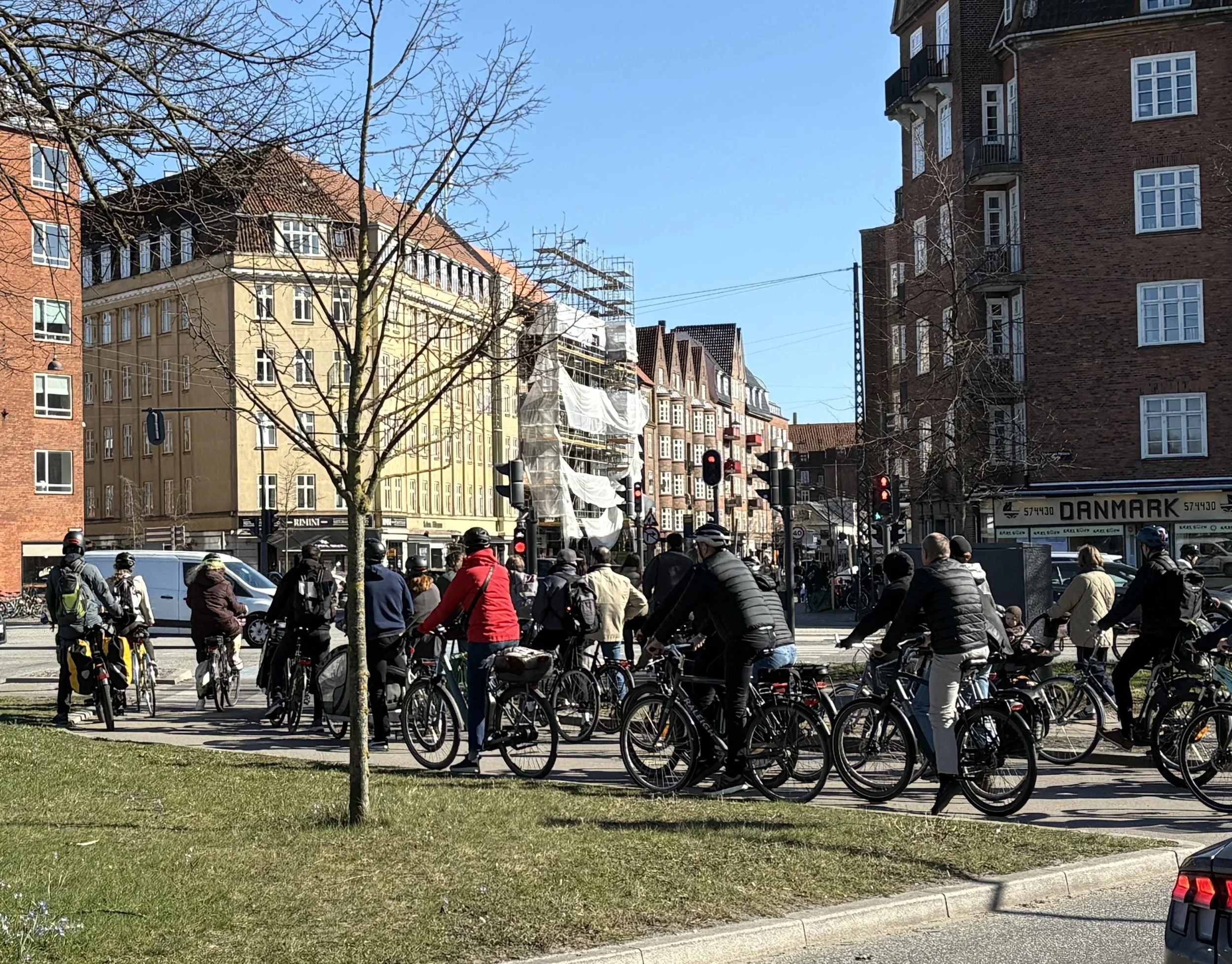
It’s true— a lot of people bike in Copenhagen. As someone who gets around mostly by bike and supports active transportation organizations and initiatives, I had heard about Denmark’s capital as a cycling mecca for years but had never seen it in person. With our daughter studying abroad there this semester, my family and I got the chance to visit. It made me think about what makes cities and towns bikeable and also what such places can do for the connection and intelligence we need as humans navigating these difficult times.
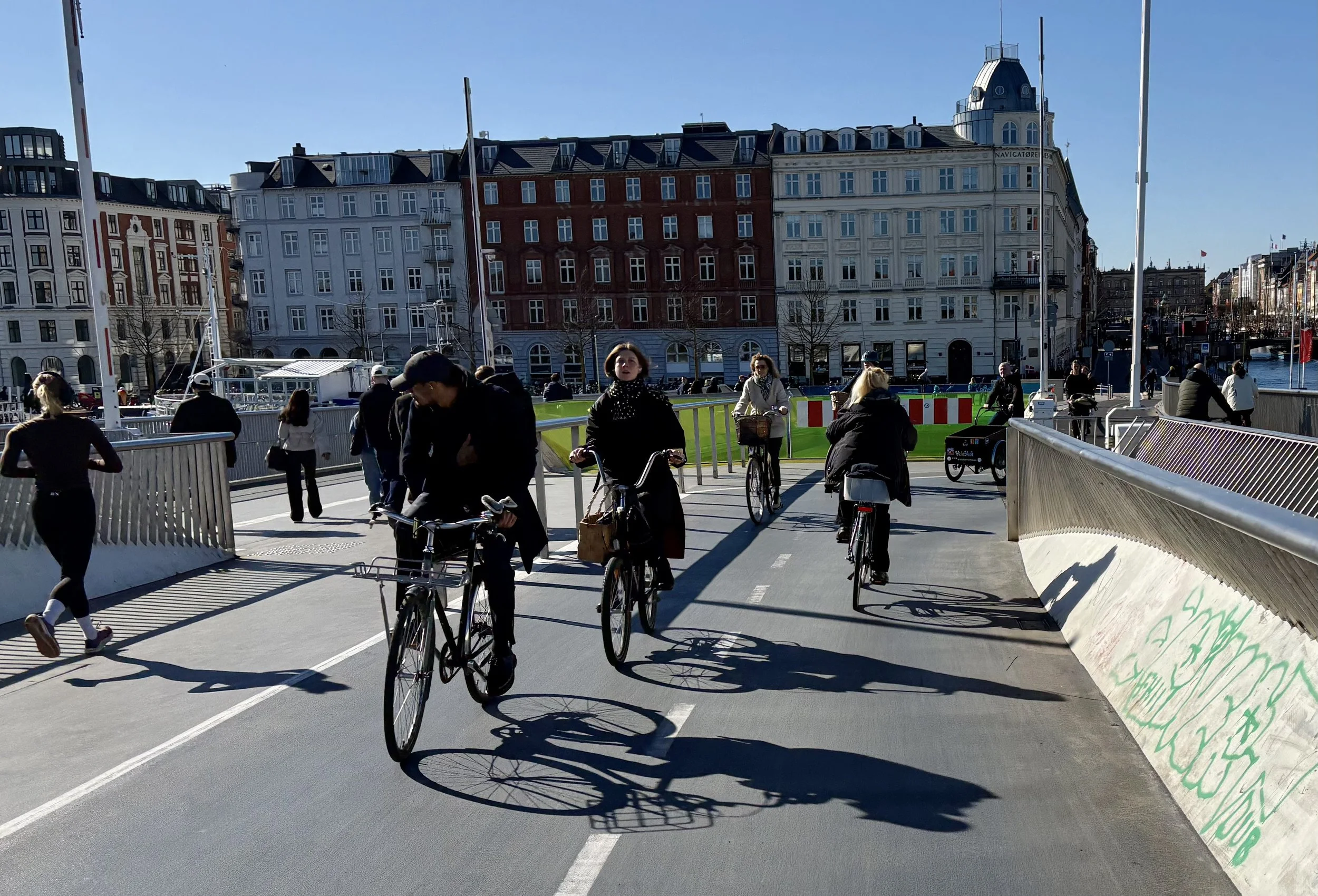
I had high expectations for what I would see, and they were largely met. Bike parking everywhere and organized. Abundant complete streets– the wider ones with sidewalk for pedestrians, a bus lane, a car lane, and a raised bike lane (situated between the sidewalk and motor vehicle lanes) running each way. Very little conflict among different street users. Bike share easy to access and affordable. Enough space in the bike lane for people to pass one another in a safe, easy fashion. In other words, a city that makes biking a real choice for many people. Over half of its residents make that choice through regularly biking to work and school.
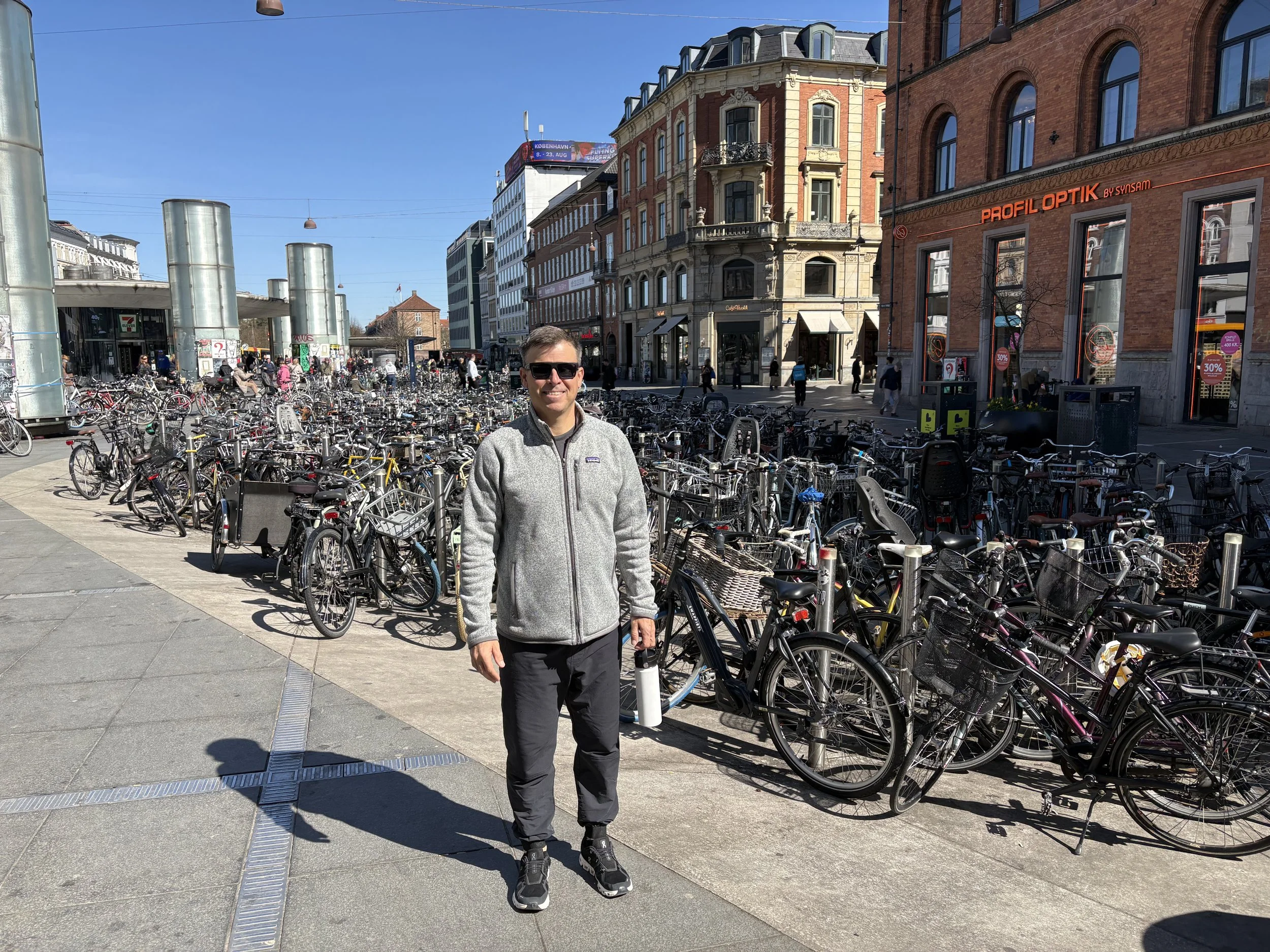
My introduction to biking in Copenhagen was on a Donkey Republic bike. Intrigued by its name, I had to learn what was behind it. As shared on the company’s website, “Back in the day, donkeys were a common and democratic form of transport that everyone could get around on.” They offer a “growing herd of affordable and accessible bikes” in Copenhagen and other European cities.
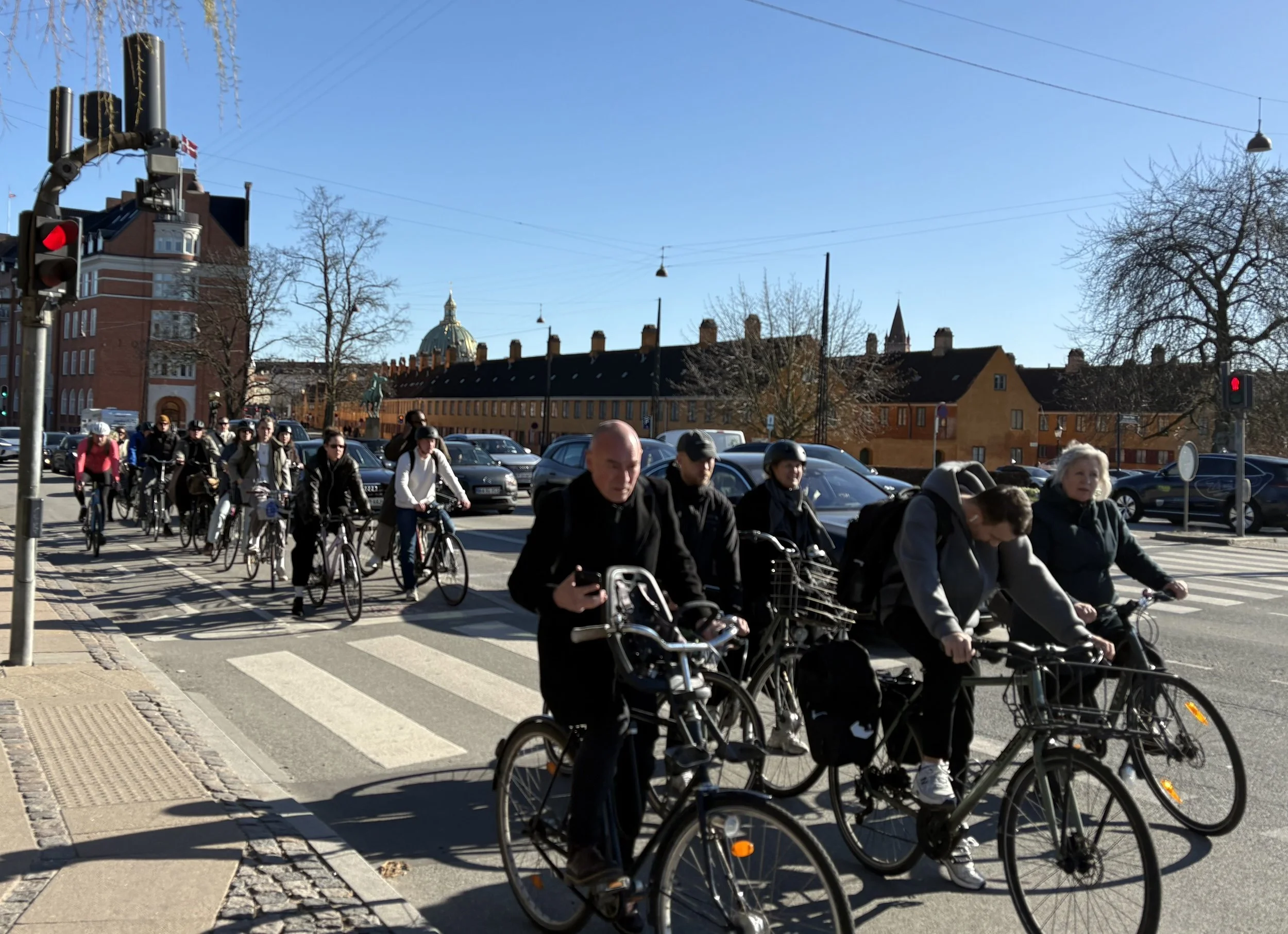
One afternoon, I rented a Donkey Republic bike ($6.80 for a one-hour rental). With no destination in mind, I found myself in the flow of a large group of cyclists. I easily crisscrossed the city east-west and north-south in separated bike lanes and slower side streets (where separation was not needed). I was experiencing legitimate 8-80 infrastructure, where people aged 8 to 80, with different abilities, feel comfortable and safe biking and rolling.
As I rode with others, I started feeling less like an individual riding a bike. I had become part of one living, moving thing– a human “herd”.
Making our places bikeable with 8-80 conditions benefits our collective well-being— e.g., minimizes the environmental impact of transportation, strengthens local community, and helps people get around in affordable, active ways. None of these benefits may be more important than the real-world connection that safe, easy biking enables.
Daily life has become less and less defined by in-person connection to our physical surroundings. Full sensory experiences are increasingly being pushed out of our lives as our time behind screens, windshields, and walls grows. With much of our attention being directed to virtual, private spaces, connection to nature and community in the places where we live is in decline.
Regular biking is a powerful antidote to this growing disconnectedness, activating all of one’s senses. Feeling the wind and sun. Hearing birds and humans chatter. Seeing leaves on trees flutter in the breeze. Touching the pedals and handlebars and placing one’s feet on the ground at stops. Smelling baked goods from a cafe. Interacting verbally and nonverbally with others in the “herd”. And many other possibilities in every experience.
We yearn for connection. It’s deep in our DNA and essential to our well-being. Connecting to nature and community around us through all our senses engages us emotionally, cognitively, and physically, and boosts our well-being across these dimensions of being human.
Yet our society is revolving more and more around digital technology and AI, leaving us largely disconnected from what is actually around us. Washed over in the rush to AI dominance is how this disconnectedness constrains our knowledge and understanding of the real world to machine-generated data and processing this information through just our visual sense. In contrast to the narrative perpetuated by corporations that stand to profit from it, AI limits our human intelligence in many ways.
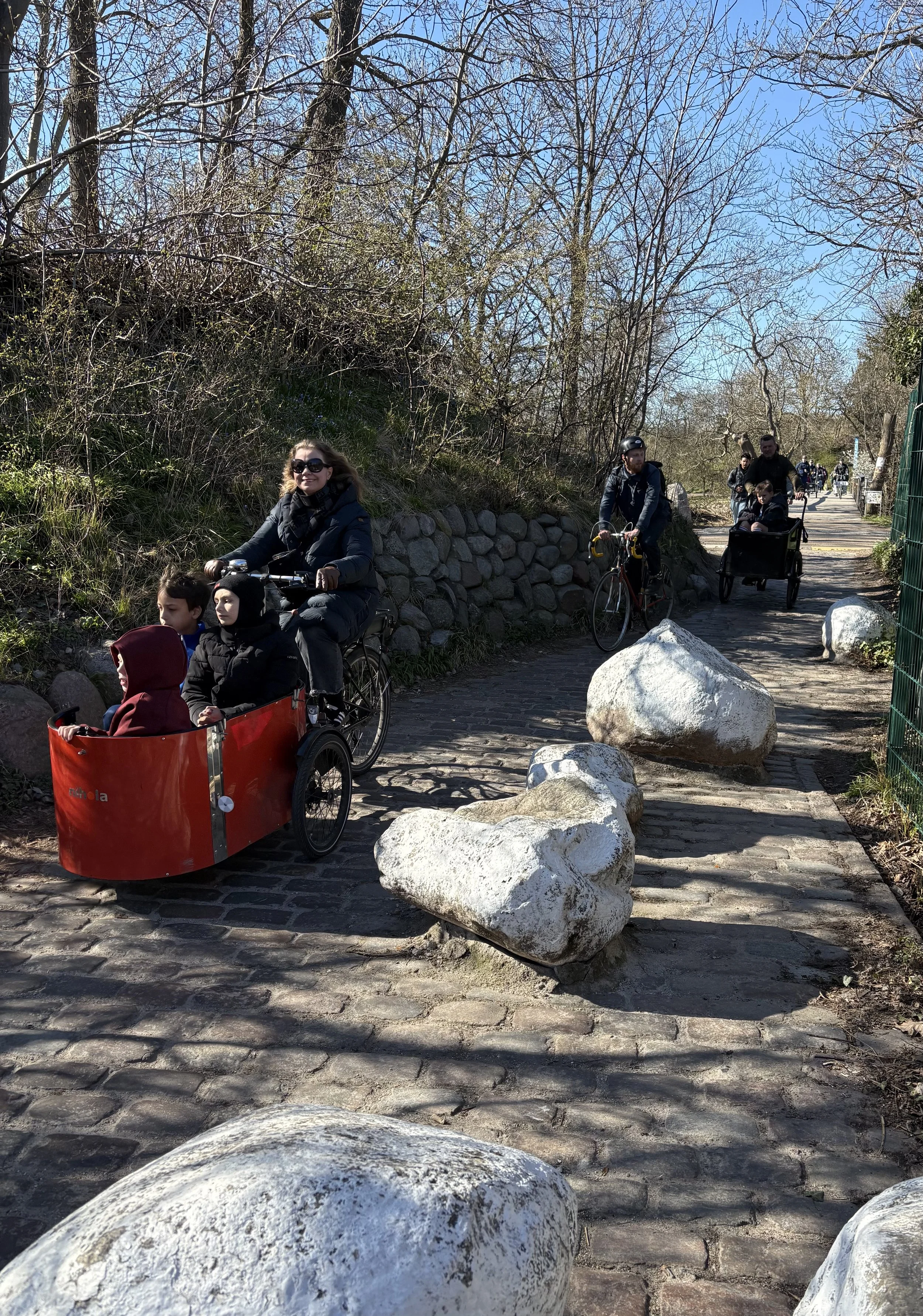
We can choose another path. We can center our lives around interactions with our places– the real, physical world around us. Direct, full sensory experiences in local community and nature tap us into an intelligence broader, more complex, and more necessary than what we can find virtually.
Regularly connecting to place helps bring forth indigenous knowledge and wisdom that are critical to our ability to flourish as humans and as a society. True care for community and nature, upon which we depend to survive and thrive, requires being embedded in a place and knowing it directly and fully in daily life.
Biking is one means for building vital connections in the places where we live. This multisensory mode of getting around and how it benefits us emotionally, cognitively, and physically, similar to rolling and walking, is a signal from nature that we are in alignment.
I’m not suggesting that all we need to do is bike or that it’s always easy. Sometimes it’s cold (didn’t seem to bother the Copenhagen cyclists, though!) or wet. Construction activity and cars can be noisy. And people don’t always get along. On my ride in Copenhagen, I witnessed a verbal altercation between two riders who felt wronged by the other. Friction happens when we put ourselves out there. However, these experiences also help us learn, grow, and adapt.
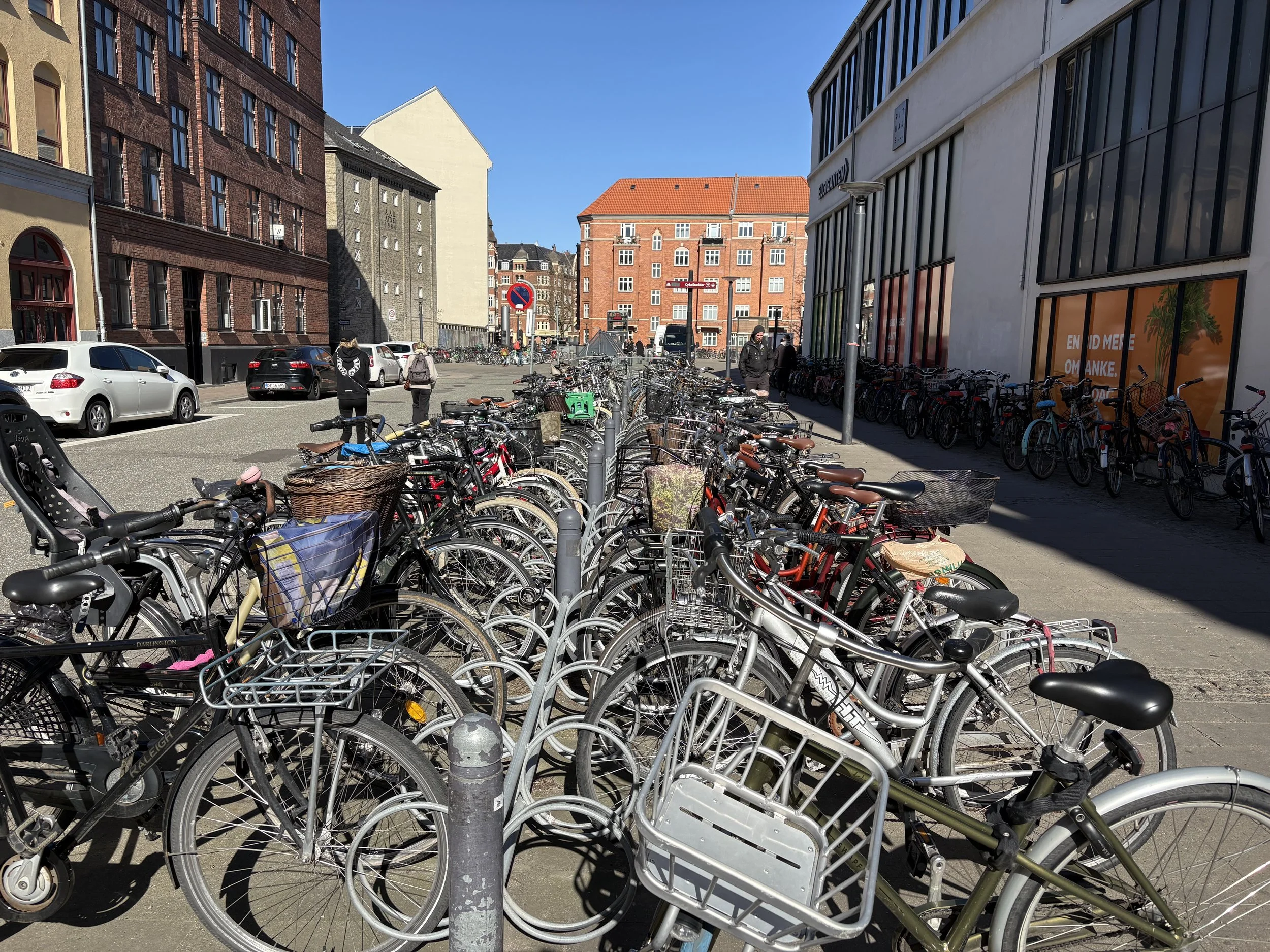
What biking always provides is access to the real world and the opportunity to experience all our senses. In bikeable places, we build community when we join the “herd”. It’s a form of resistance to societal forces, like AI, that are depleting local community and narrowing our ways of experiencing the world and our actual intelligence.
Copenhagen biking is a great reminder of the power of connecting with the physical and human world around us. It shows us a way to be in the world and use our senses to connect with each other, nature, and the greater intelligence found beyond our screens, windshields, and private spaces.
We need the conditions around us to make real world connection our default choice, especially as powerful economic forces push in the other way. Making our place bikeable is a great way to catalyze the types of connection and intelligence we need. Thanks to Copenhagen for showing us the way.