
I spent the first 17 years of my career working in public education, starting as a high school social studies teacher. Early on, I learned that the traditional approach to curriculum and instruction left many students bored and restless. Nothing changed that equation more than getting students outside and learning on the campus or in the community. I did what I could to create these place-based learning experiences for students, but felt limited in time and resources to make it a regular thing.
Years later, as a consultant, I worked with organizations that helped schools and teachers plan and implement place-based education. Often under the title of environmental education, this approach to curriculum spans all subjects and engages students in learning firsthand about food, energy, transportation, nature, and other local systems. Had I only known these organizations when I was teaching!
A program that really stands out is the Environmental Literacy and Sustainability in the San Mateo County Office of Education. Andra Yeghoian started and led the program for several years, organizing it around a framework of integrating campus, curriculum, community, and culture. Now under Julie Hilborn’s leadership, the program provides direct support to educators and student leaders and partners schools and teachers with other organizations to provide students with place-based learning opportunities.
I now focus on place-based education as a systems change catalyst. Involving students in curriculum that regularly connects them to their places often leads to projects in which students help to make their places better. They take these skills with them, while leaving a positive impact on local nature and community.
Andra is now the Chief Innovation Officer at Ten Strands, a statewide nonprofit with an outsized impact on integrating environmental literacy and place-based education into schools across California. She will be our featured speaker and facilitator at the Commonwealth Club’s Transforming Region forum on December 9th. See details below and register here.
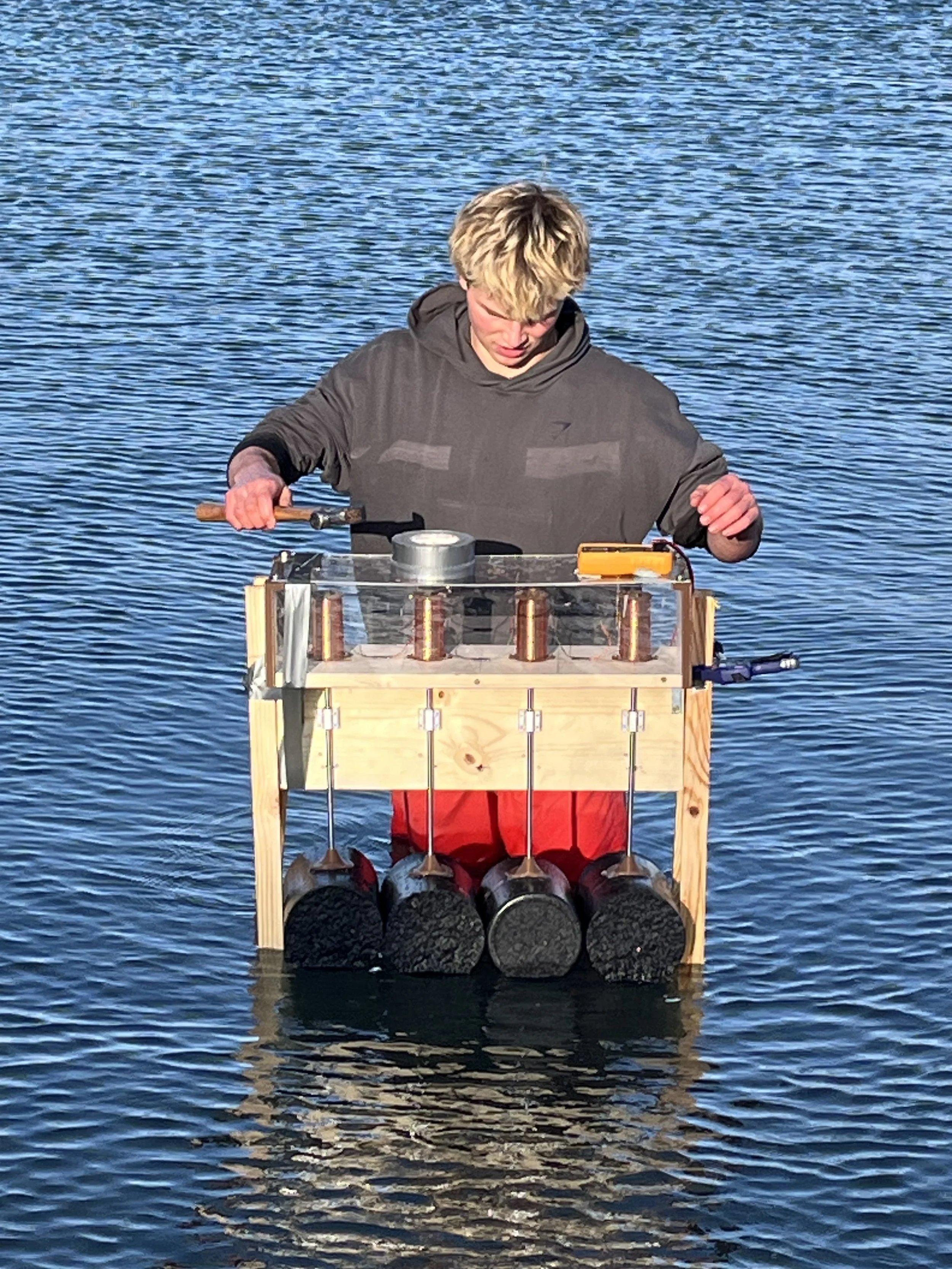
And yes, the picture above is an example of place-based education and shows my son in his junior year of high school. In contrast to his struggle to pay attention in the classroom, he was consumed by this project for two years. With support from an innovation and inquiry program at his school, he developed a prototype to harvest wave energy for electricity generation and learned a lot about physics, math, and electrical and mechanical engineering in the process. The picture shows his final test in the Bay, and it worked! Place-based education is, first and foremost, a way to engage students in deep, meaningful, standards-based learning, and a bonus is that it can also serve as a systems change catalyst.